

Blog
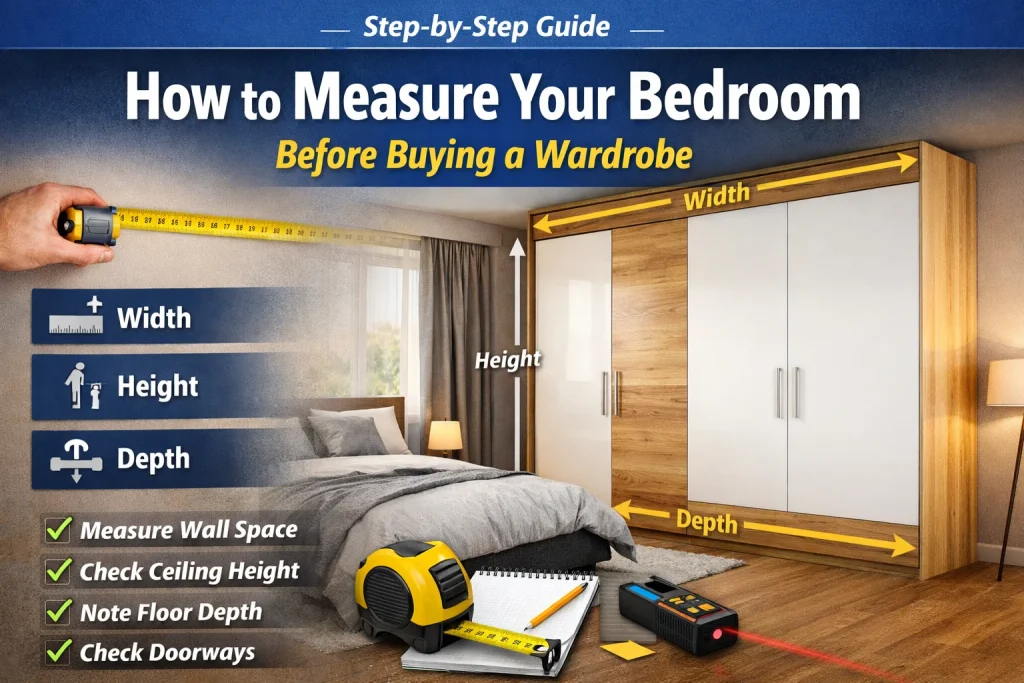
Buying a wardrobe without measuring your bedroom properly is one of the most common mistakes homeowners make. As a result, you may end up with a wardrobe that is too big, too small, or difficult to use comfortably. Therefore, measuring your bedroom correctly ensures the wardrobe fits perfectly, looks balanced, and functions efficiently.
In this complete guide, you will learn how to measure your bedroom before buying a wardrobe, what tools you need, and which dimensions matter most. Moreover, this guide follows semantic SEO and readability best practices so you can make the right buying decision with confidence.
Why Measuring Your Bedroom Before Buying a Wardrobe Is Important
Before you choose a wardrobe, measuring your bedroom helps you avoid expensive and frustrating mistakes. Additionally, it ensures proper space planning and improves overall room functionality.
Key Benefits of Measuring First
- Ensures the wardrobe fits perfectly in the available space
- Prevents blocking doors, windows, or walkways
- Improves bedroom layout and comfort
- Helps choose the correct wardrobe size and type
- Avoids delivery and installation problems
Furthermore, accurate measurements allow you to select wardrobes that enhance your room instead of overcrowding it.
Tools You Need to Measure Your Bedroom
Before starting, gather the right tools. This makes the process faster and more accurate.
Essential Measuring Tools
- Measuring tape (at least 5 meters)
- Notebook or phone for recording measurements
- Pencil or pen
- Laser measure (optional but helpful)
- Spirit level (optional for accuracy)
Although a measuring tape is enough, a laser measure can improve precision, especially for large bedrooms.
Step-by-Step Guide: How to Measure Your Bedroom for a Wardrobe
Follow these steps carefully to get accurate and useful measurements.
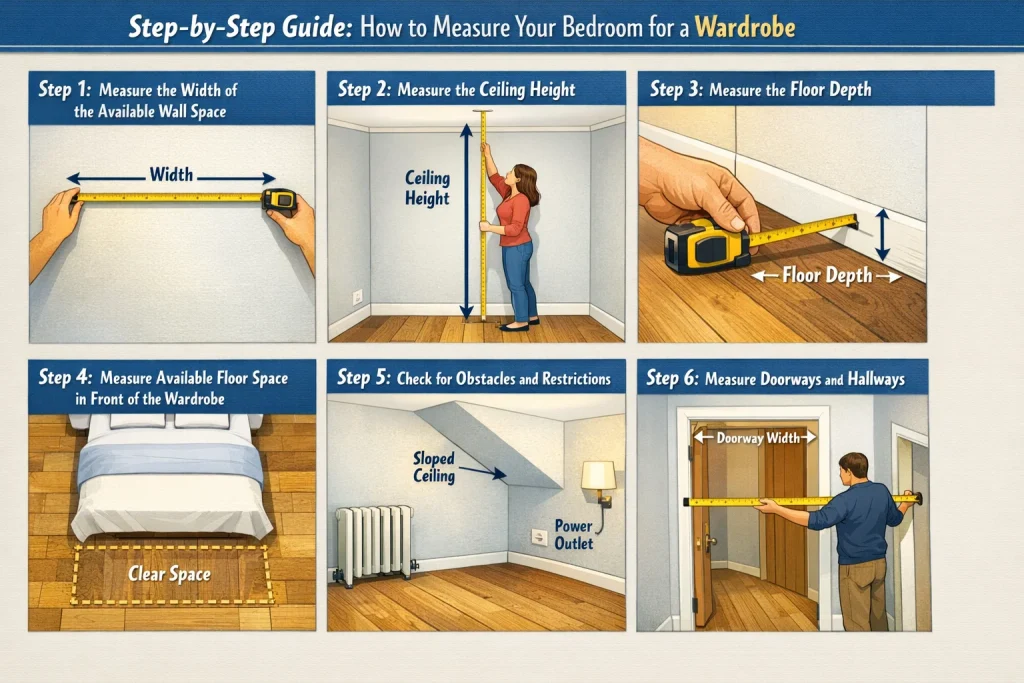
Step 1: Measure the Width of the Available Wall Space
First, measure the total width of the wall where you plan to place the wardrobe.
How to Measure Width
- Measure from one end of the wall to the other
- Record the measurement in centimeters
- Measure at floor level and mid-wall level
- Use the smallest measurement for safety
For example, if your wall width is 240 cm, choose a wardrobe slightly smaller, such as 220–230 cm.
Step 2: Measure the Ceiling Height
Next, measure the height from the floor to the ceiling.
This is important because wardrobes come in different heights. Additionally, you need clearance for installation.
Important Tips
- Measure from floor to ceiling at multiple points
- Use the shortest measurement
- Leave at least 2–5 cm clearance
For instance, if your ceiling height is 240 cm, select a wardrobe around 235 cm tall.
Step 3: Measure the Floor Depth
Wardrobe depth affects both storage capacity and walking space. Therefore, measuring depth ensures comfort and accessibility.
Standard Wardrobe Depth
| Wardrobe Type | Standard Depth |
|---|---|
| Sliding door wardrobe | 60–65 cm |
| Hinged door wardrobe | 55–60 cm |
| Compact wardrobe | 45–55 cm |
Additionally, ensure enough walking space remains after placing the wardrobe.
Step 4: Measure Available Floor Space in Front of the Wardrobe
You must leave enough space to open doors and move comfortably.
Recommended Clearance Space
| Wardrobe Type | Clearance Needed |
|---|---|
| Sliding doors | 60 cm minimum |
| Hinged doors | 80–100 cm minimum |
Sliding wardrobes require less clearance. Therefore, they are ideal for small bedrooms.
Step 5: Check for Obstacles and Restrictions
Many people forget this step. However, obstacles can affect wardrobe placement.
Look for These Common Obstacles
- Doors and door frames
- Windows
- Radiators
- Light switches
- Electrical sockets
- Skirting boards
- Ceiling slopes
For example, a radiator behind the wardrobe can reduce usable space. Therefore, measure around it carefully.
Step 6: Measure Doorways and Hallways
This step ensures the wardrobe can be delivered and installed easily.
Important Areas to Measure
- Bedroom door width
- Hallway width
- Staircase width
- Elevator size (if applicable)
If the wardrobe cannot pass through doors, installation becomes difficult.
Ideal Wardrobe Size Based on Bedroom Size
Choosing the right wardrobe size depends on your bedroom dimensions.
| Bedroom Size | Recommended Wardrobe Width |
|---|---|
| Small bedroom (up to 10 m²) | 100–150 cm |
| Medium bedroom (10–16 m²) | 150–200 cm |
| Large bedroom (16+ m²) | 200–300 cm |
Additionally, always maintain balance between storage and open space.
Standard Wardrobe Dimensions Guide
Understanding standard wardrobe dimensions helps you choose correctly.
| Dimension | Standard Size |
|---|---|
| Height | 200–240 cm |
| Depth | 55–65 cm |
| Width per door | 45–60 cm |
These dimensions work well in most modern bedrooms.
Tips to Ensure Perfect Wardrobe Placement
Although measurements are important, smart planning improves results even more.
Practical Placement Tips
- Place wardrobes against the longest wall
- Avoid blocking natural light
- Keep distance from doors
- Use sliding wardrobes in small rooms
- Consider ceiling-height wardrobes for more storage
Moreover, ceiling-height wardrobes maximize vertical storage efficiently.
Common Measuring Mistakes to Avoid
Many buyers make simple mistakes that cause big problems later.
Avoid These Mistakes
- Measuring only once
- Ignoring skirting boards
- Forgetting door clearance
- Not checking ceiling height
- Choosing wardrobe equal to wall width
- Ignoring installation clearance
Therefore, always measure twice before buying.
Sliding vs Hinged Wardrobes: Measurement Differences
Choosing the right door type affects space planning.
| Feature | Sliding Wardrobe | Hinged Wardrobe |
|---|---|---|
| Space saving | Excellent | Moderate |
| Clearance needed | Less | More |
| Ideal for small rooms | Yes | No |
| Accessibility | Partial at once | Full access |
Sliding wardrobes are better for compact bedrooms. However, hinged wardrobes provide full access.
Bedroom Measurement Checklist
Use this checklist before buying your wardrobe:
- Wall width measured
- Ceiling height measured
- Floor depth measured
- Clearance space checked
- Obstacles identified
- Doorways measured
- Installation space confirmed
This checklist ensures a smooth buying process.
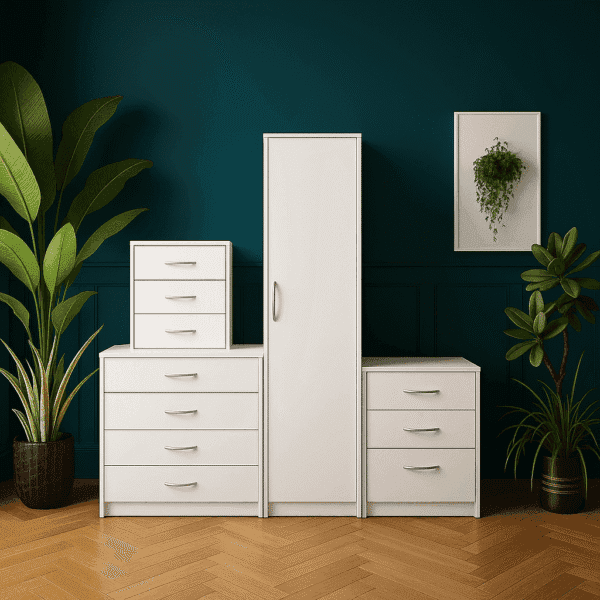
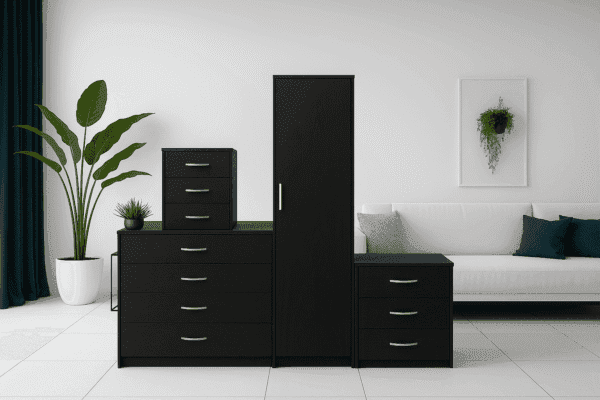
1 Door Wardrobe Set ( Assembled )
Original price was: £ 300.£ 210Current price is: £ 210.1 Door Wardrobe Set Black ( Assembled )
Original price was: £ 300.£ 210Current price is: £ 210.1 Door Wardrobe Set Grey ( Assembled )
Original price was: £ 300.£ 210Current price is: £ 210.
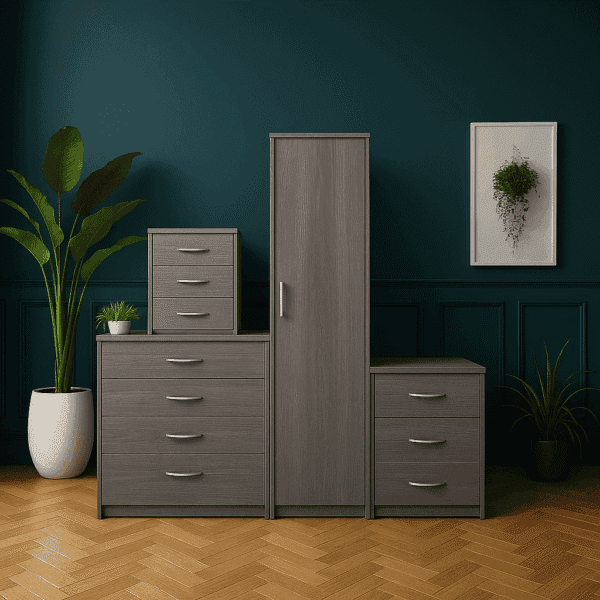
How Proper Measurements Improve Bedroom Design
When you measure correctly, your bedroom looks more organized and spacious. Additionally, furniture placement becomes easier and more functional.
Benefits include:
- Better space utilization
- Improved room appearance
- Easier movement
- Enhanced comfort
- Increased storage efficiency
Therefore, accurate measurements improve both style and practicality.
When to Consider Custom Wardrobes
Sometimes standard wardrobes may not fit perfectly. In that case, custom wardrobes are the best solution.
Consider custom wardrobes if:
- Your room has unusual dimensions
- You have sloped ceilings
- Space is limited
- You want maximum storage
Custom wardrobes ensure perfect fit and efficiency.
Final Thoughts: Measure First, Buy Smart
Measuring your bedroom before buying a wardrobe is essential. It helps you avoid mistakes, save money, and improve bedroom functionality. Furthermore, accurate measurements ensure your wardrobe fits comfortably and enhances your room’s overall look.
By following this guide, you can confidently choose the right wardrobe size, type, and placement.
For high-quality wardrobes in the UK, you can explore options from AMD Furniture UK. They offer a wide range of modern, sliding, and space-efficient wardrobes designed for different bedroom sizes. Additionally, their expert guidance helps customers select wardrobes that fit perfectly.
Read more : 6 Door Wardrobe Buying Guide for Large Bedrooms
FAQ’s
You should leave at least 5 cm on sides and 60–100 cm in front for comfortable use.
The standard wardrobe depth is between 55 cm and 65 cm.
No. Leave at least 2–5 cm clearance for installation and ventilation.
Yes. Sliding wardrobes save space because they do not require door opening clearance.